

Laser cataract surgery is recommended for that person who is suffering from a cataract. A cataract is an eye disorder in which the natural lens of the eye becomes cloudy which leads to blurry, cloudy or dim vision. When anybody has a cataract, he is unable to see properly and has difficulty in reading at night. Cataract can’t be cured with any medication, it can only be corrected with laser cataract surgery. Therefore, to get rid of cataract, an ophthalmologist suggests surgery. So, in this article, we will discuss laser cataract surgery and its benefits, procedure and its side effects.
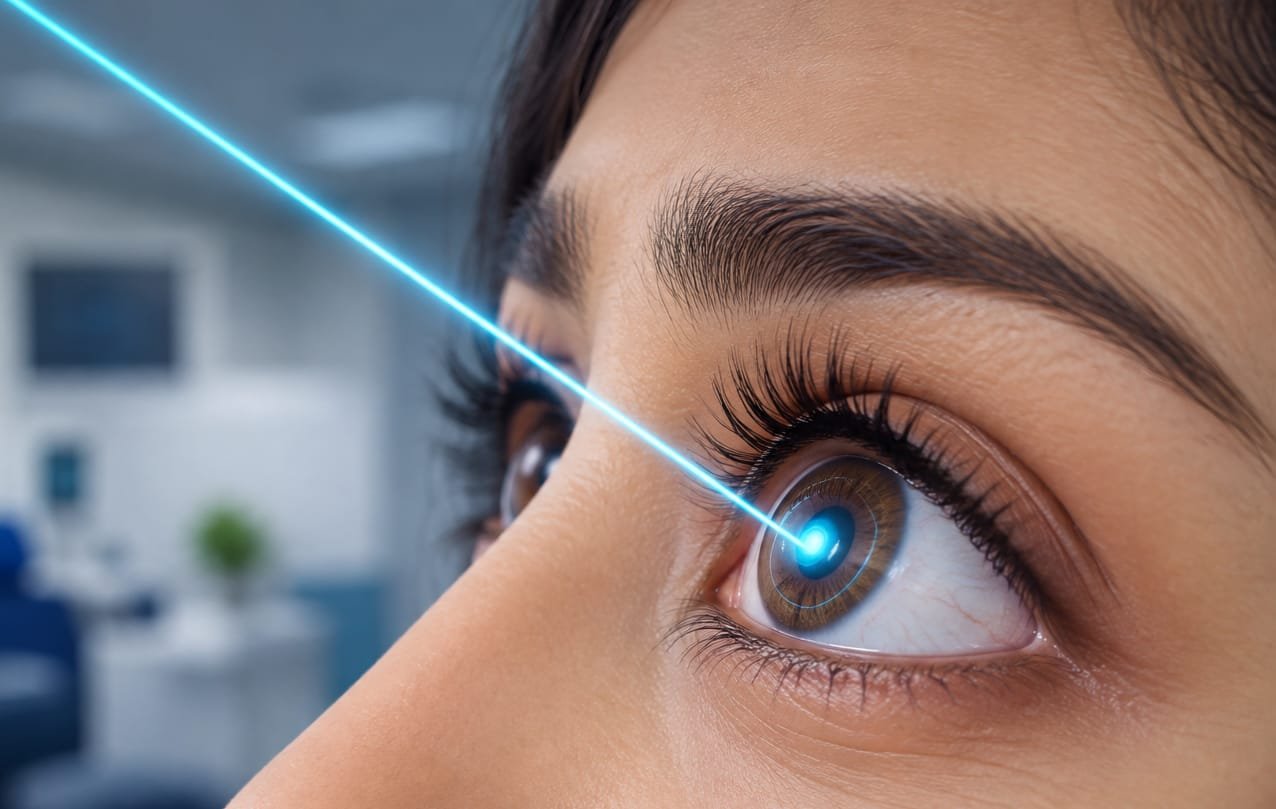
Laser cataract surgery is a kind of surgery in which an ophthalmologist removes the natural cloudy lens and replaces it with a new and clear artificial lens that is made of silicon, acrylic or plastic. Laser cataract surgery is a very advanced technology that uses an imaging system to give a 3-D view
of your eye and assists an ophthalmologist in planning and treating cataract and improves your vision. This is a blade-free assisted surgery that reduces the instruments used and increases the precision of the procedure. During cataract surgery, the surgeon uses laser to create a precise incision and a circular opening to access and remove the cataract. Besides it, laser cataract surgery is used to soften the cataract before removal.
In short, laser cataract surgery is a bladeless, quick and safe procedure. In the further article, you will know about the advantage, disadvantages and procedures of laser cataract surgery.
1. More precise vision correction: - In laser cataract surgery, a 3-D view is created by an imaging
system which results in an accurate vision. The person who gets laser cataract surgery, experiences more clear
vision after he has healed.
2. Low risk of complication: - As we told you that it is a bladeless procedure,
so there is less chances of complications.
This surgery removes the cataract and reshapes the cornea.
3. Speedy recovery:- It takes up to one or two weeks to recover after laser cataract surgery as there
is low risk of complications.
4. Painless surgery: - laser cataract surgery is painless as your surgeon gives you medication
to numb your eye and they use laser ray and ultrasound to break down cataracts into pieces. As a result,
the cataract is removed easily.
5. Multifocal lens implanting may lessen the dependence on the corrective eyeglasses after surgery.
The procedure of laser eye surgery involves three stages that are mentioned below:-
Before the surgery, your surgeon will give you an anesthetic medication injection to make you
relax and after that, he will give you an anesthetic injection with a needle or eye drop into your eye so
that you don’t feel any pain during the surgery.
If you feel anything that will be eye pressure. They will cover your face with a medical drape.
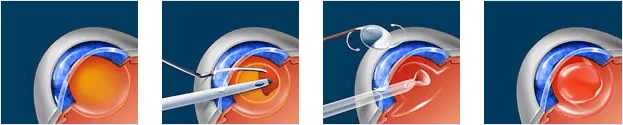
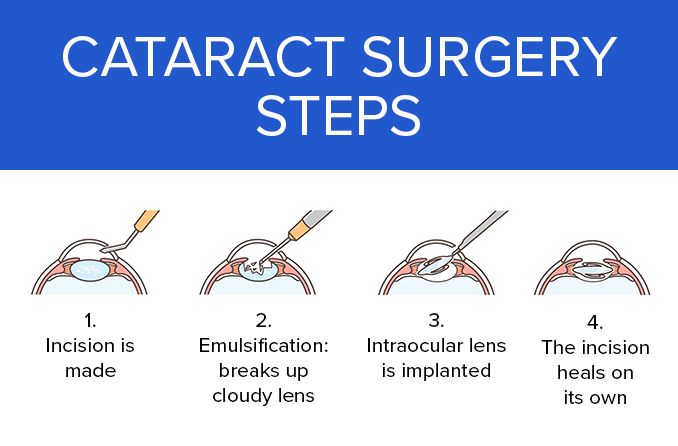
Laser cataract eye surgery is done with your eye opened. A small retractor is placed around the eye. He will make a small incision of about 2 to 2.5 mm long in the periphery of your cornea with laser. They break the lens into small pieces using a femtosecond laser. Next, they will insert a new intraocular lens implant to replace the previous cloudy lens. Thereafter, your surgeon may also create a small incision with the laser to prevent residual astigmatism after surgery. The incision is self-sealing so, there is no need for stitching.
For recovery, your ophthalmologist will prescribe you some medicines and eye drops to prevent
dryness in your eyes. If you feel better or you don’t have any complications after laser cataract
surgery then, you will be discharged to go home the same day.
After laser cataract surgery, you will recover within a week still,
you need to wait for your ophthalmologist to give you green light.
• As you know that after surgery it takes time to heal so, protect your eye for several weeks.
• Protect your eyes from any kind of chemicals or water.
• Always wear sunglasses to protect your eyes from the sunlight while going outside.
And also protect them from bright light inside the house.
Although laser cataract surgery is very safe and has very low chances of risk or side effects yet,
you may experience the following symptoms of side effects:-
• Blurry vision
• Dry eyes
• Discomfort or a kind of itching in your eye
• Glare and halos around the light
• Light sensitivity
• Nausea
• Red eye
• Droopy eyelid

Clear answers to common questions about laser cataract surgery, recovery, safety, costs and lens options in Delhi.
Laser cataract surgery is an advanced, blade-free cataract procedure in which the cloudy natural lens of the eye is removed and replaced with an artificial intraocular lens (IOL). Femtosecond laser technology can assist the surgeon in creating precise incisions and breaking up the cataract before it is removed. At Bharti Eye Foundation, laser-assisted cataract surgery is performed with advanced imaging and surgical technology.
Laser cataract surgery offers greater computer-guided precision and can reduce the need for manual steps during certain parts of cataract surgery. However, the best cataract surgery technique depends on your eye condition, cataract type, corneal health and IOL requirements. An ophthalmologist should recommend the most suitable procedure after an eye examination.
Laser cataract surgery is generally performed with local or topical anaesthesia, so patients typically do not feel significant pain during the procedure. Some patients may experience mild pressure or temporary discomfort. Your eye surgeon will choose the appropriate anaesthesia based on your individual needs.
Many patients can return home the same day, while vision and the eye continue to improve during the following days and weeks. Bharti Eye Foundation's page states that recovery can take about one to two weeks, although the exact recovery period varies from patient to patient and should be confirmed by the treating ophthalmologist.
Laser cataract surgery can be a suitable option for many elderly patients, but suitability depends on overall eye health and other medical conditions. A detailed eye examination is important before surgery to assess the cataract, retina, cornea and other factors that can affect the outcome.
The major benefits of laser cataract surgery include precise laser-assisted incisions, reduced dependence on manual surgical steps, potentially faster recovery and the option of advanced IOLs for selected patients. At Bharti Eye Foundation in New Delhi, patients can discuss their cataract condition and lens options with an ophthalmologist before choosing the appropriate procedure.
The cost of laser cataract surgery in Delhi varies according to the surgical technique, surgeon, hospital facilities and type of intraocular lens selected. Premium lenses such as multifocal, trifocal, EDOF or toric IOLs can affect the total cost. Patients should get an individual estimate after an eye examination rather than relying on a general online price.
Laser cataract surgery can reduce dependence on glasses in some patients, particularly when an appropriate premium IOL is selected, but it cannot guarantee complete freedom from glasses. The final result depends on factors such as the patient's eye health, IOL selection and individual visual requirements.
After laser cataract surgery, use prescribed eye drops and medicines, avoid rubbing or putting pressure on the operated eye, protect your eyes from dust and bright sunlight, and follow your ophthalmologist's instructions. Bharti Eye Foundation also advises protecting the eye from water and chemicals during the healing period.
Patients looking for advanced laser cataract surgery in Delhi can consult Bharti Eye Foundation at East Patel Nagar, New Delhi, for an eye examination and personalised cataract treatment plan. The centre provides cataract surgery and other specialised eye-care services under one roof.
| Week-Days: | 9am - 6pm |
| Sunday: | CLOSED |
Copyright © 2022 · All Rights Reserved Bharti Eye Foundation