

For many people who have worn glasses for years, the idea of spectacle removal surgery is appealing but comes with questions - which procedure is right, how much of a difference will it really make, and what does recovery actually look like? This page focuses specifically on CLEAR as a spectacles removal option in Delhi: what it can realistically achieve for patients with myopia and astigmatism, how it compares to other glasses-removal procedures, and how to know if you are a suitable candidate.
Patients typically consider spectacle removal surgery for a mix of practical and lifestyle reasons: discomfort or inconvenience of wearing glasses during sports and daily activity, difficulty with contact lenses, professional or cosmetic preference, or simply wanting a long-term reduction in dependence on corrective eyewear. Whatever the motivation, the decision should be based on a proper eye evaluation rather than convenience alone, since not everyone is medically suited to every refractive procedure.
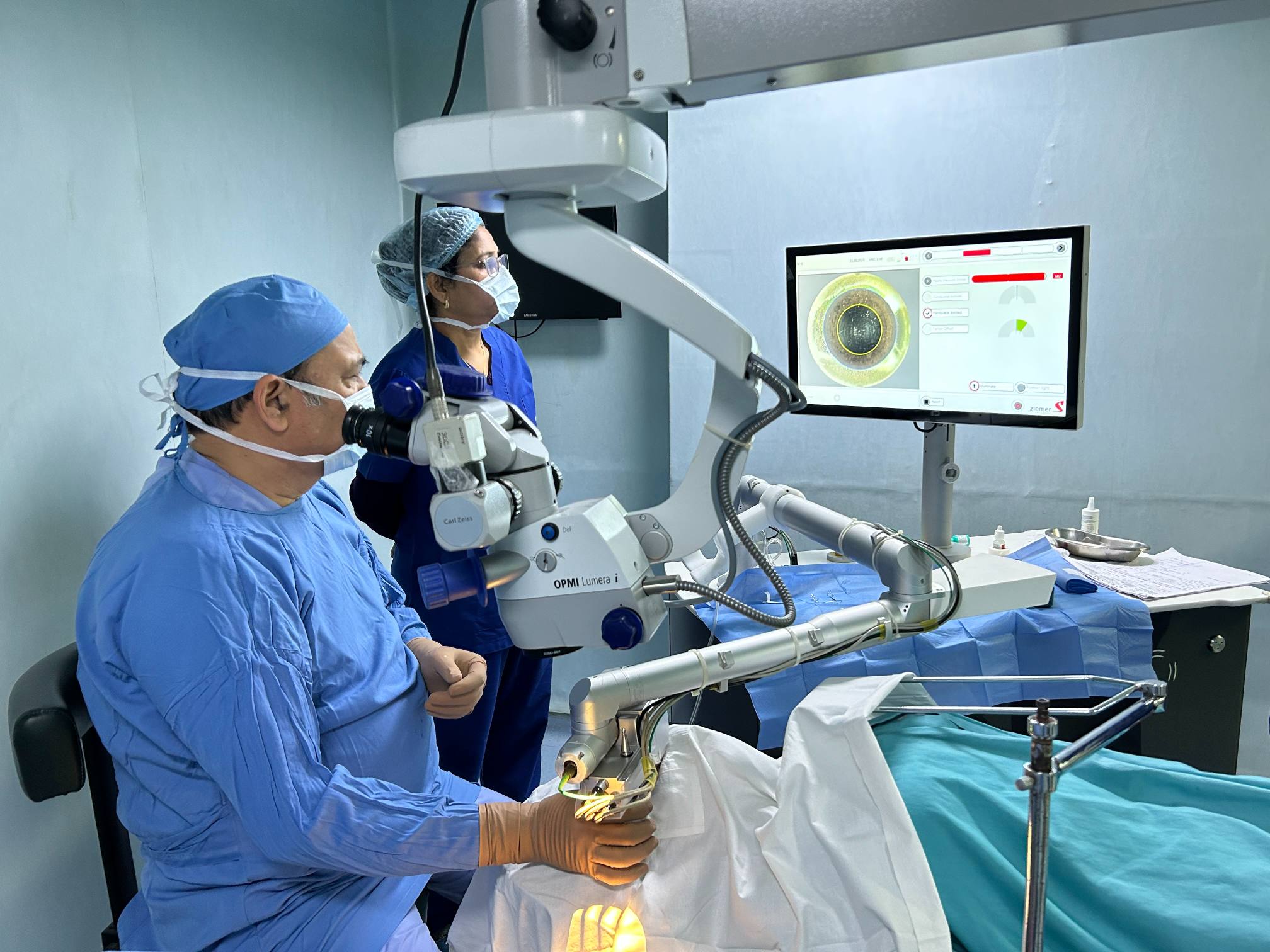
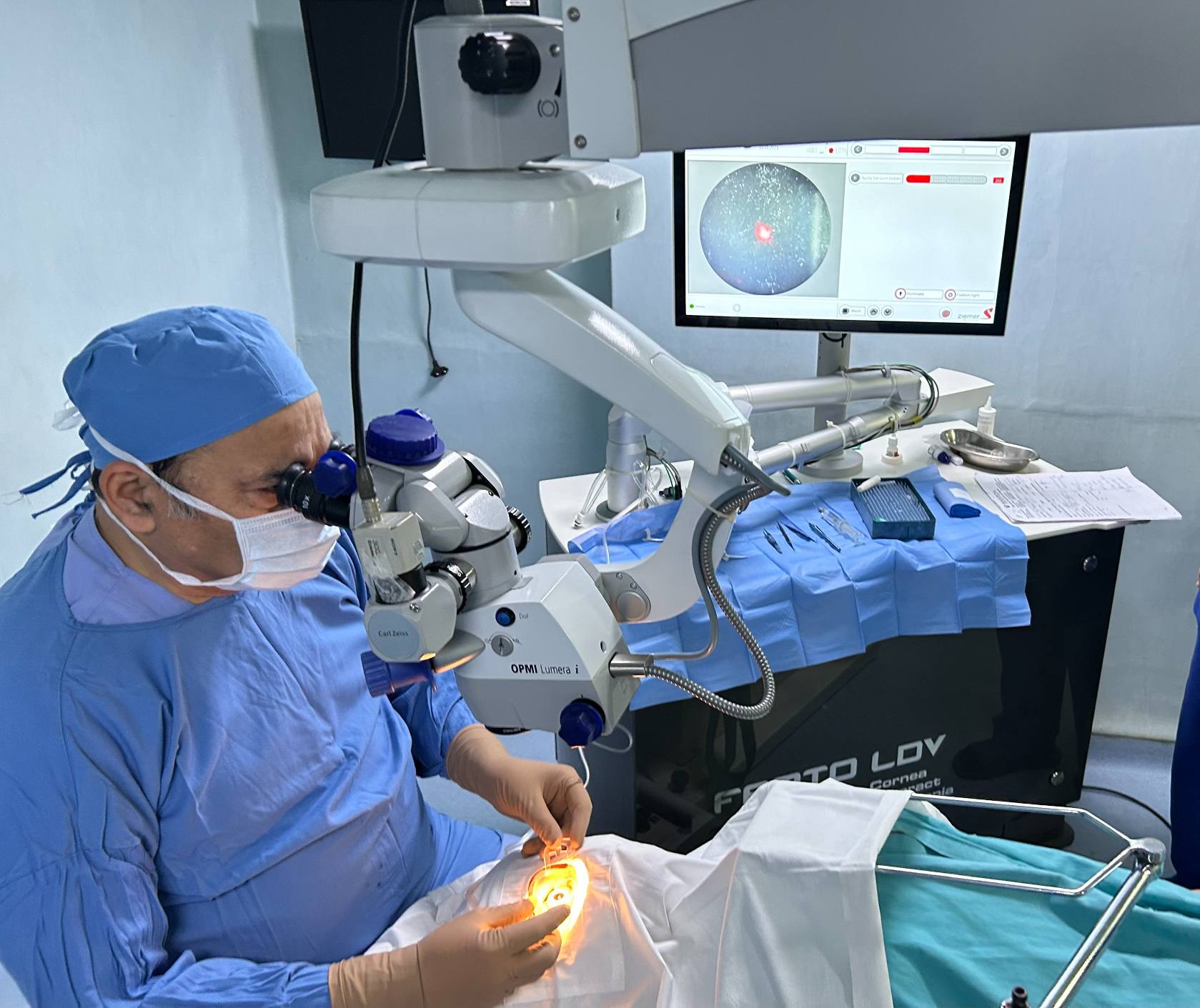
CLEAR treats the underlying cause of blurred vision in myopia and astigmatism - the shape of the cornea. Using the Ziemer Femto LDV Z8 laser, the surgeon creates a lenticule (a thin, precisely shaped piece of corneal tissue) inside the stromal layer and removes it through a small incision. This permanently reshapes the cornea so that light entering the eye focuses correctly on the retina, without needing a spectacle lens to bend the light beforehand. Because no corneal flap is created, the top corneal layers remain undisturbed, which is one of the features that distinguishes CLEAR from flap-based refractive surgery.
Several surgical routes exist for reducing dependence on glasses, and each suits a different patient profile:
• LASIK: A flap-based laser procedure, widely performed, suitable for a broad range of patients with adequate corneal thickness.
• SMILE: A flapless lenticule extraction procedure on the Zeiss VisuMax platform.
• CLEAR: A flapless lenticule extraction procedure on the Ziemer Femto LDV Z8 platform, which may suit some patients with dry eye tendencies or those not ideal for LASIK.
• ICL (Implantable Collamer Lens): A lens is surgically placed inside the eye rather than reshaping the cornea, generally considered for patients with very high refractive errors or corneas too thin for laser correction.
There is no single "best" option for everyone - your ophthalmologist compares your corneal thickness, refractive error, pupil size and lifestyle needs against each procedure's requirements to recommend the most suitable one for you.
CLEAR may be worth discussing with your ophthalmologist if you have myopia with or without astigmatism, would prefer a flapless procedure, have some dry eye tendencies that make you cautious about flap-based LASIK, or have been told by another provider that you are not an ideal LASIK candidate. As with all refractive procedures, a comprehensive pre-operative evaluation - covering corneal thickness, topography, tear film and pupil size - is the only reliable way to confirm candidacy.
On the day of a CLEAR procedure, numbing eye drops are applied so the treatment is not painful. The Ziemer Femto LDV Z8 laser creates the lenticule, which the surgeon then removes through a small incision. The complete procedure, including preparation, is designed to take less than 20 minutes. Because no flap is created, a bandage or protective contact lens is typically not required afterward. Most patients are able to go home the same day and are given clear post-operative instructions and a follow-up schedule.
Recovery experiences vary, but as a general pattern reported for CLEAR: many patients notice meaningful visual improvement within 24 hours, mild irritation or watering may occur for the first day or two, and many patients are able to return to routine work activity within about three days. Full visual stabilisation and confirmation of the final outcome typically takes place over the following weeks, monitored through scheduled follow-up visits with your surgeon.
If you are exploring spectacle removal surgery in Delhi, the right starting point is a detailed refractive surgery evaluation rather than picking a procedure name first. Learn more about the technology behind the procedure on our CLEAR Eye Surgery in Delhi page, read about choosing a qualified surgeon on our Best CLEAR Procedure Surgeon in Delhi page, or contact Bharti Eye Foundation directly to book your evaluation.
Many patients describe the practical changes after successful spectacle removal surgery: no more fumbling for glasses first thing in the morning, no lens fogging while wearing a mask or during humid weather, no restriction on the type of sports goggles or swimwear you can use, and no glare from spectacle lenses in photographs. That said, results and satisfaction vary by individual, and it is worth discussing your specific lifestyle needs and expectations with your surgeon during the consultation, so the recommended procedure genuinely matches what you are hoping to achieve.
• "Every glasses-wearer is a candidate": Not true - eligibility depends on corneal thickness, shape, degree of refractive error and overall eye health, confirmed only through a proper evaluation.
• "All spectacle removal procedures are the same": LASIK, SMILE, CLEAR and ICL each work differently and suit different corneal and refractive profiles - the correct one is selected for you individually, not chosen at random.
• "Once done, you'll never need any vision correction again": Most patients achieve significant, long-lasting correction of their treated refractive error, but natural age-related vision changes such as presbyopia can still occur later in life, independent of the surgery performed.
• "The procedure with the shortest recovery claim is automatically the best": Recovery time is only one factor - safety profile, precision and suitability to your specific eyes matter just as much, if not more.
You may also find these pages useful: CLEAR Eye Surgery in Delhi, Best CLEAR Procedure Surgeon in Delhi, and Best Eye Doctor in Delhi NCR.
| Week-Days: | 9am - 6pm |
| Sunday: | CLOSED |
Copyright © 2022 · All Rights Reserved Bharti Eye Foundation